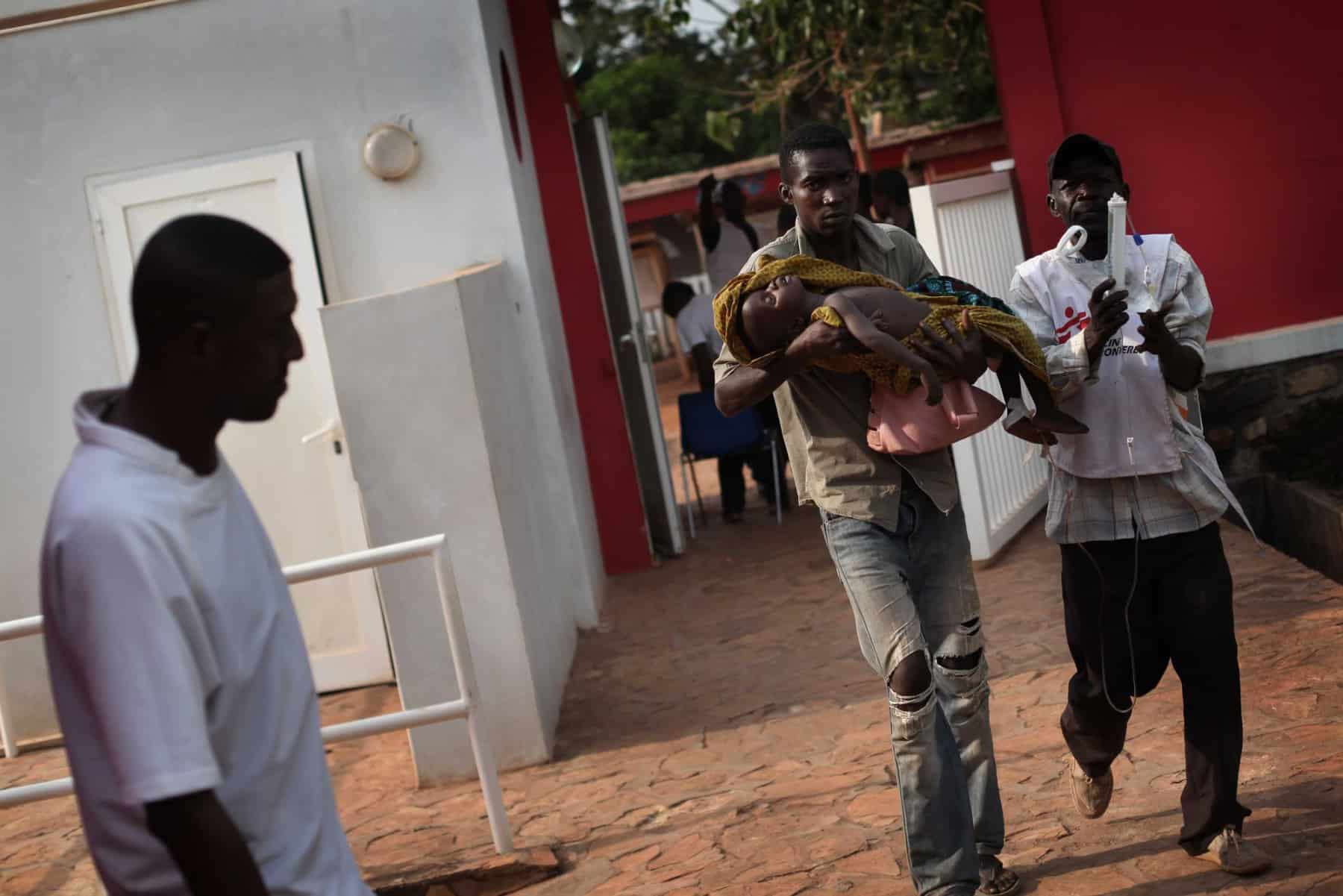
Years of bloody but largely neglected conflict in the Central African Republic (CAR) have resulted in thousands being killed or wounded and millions being displaced.
Millions of people are dependent on humanitarian assistance. Our teams see the direct consequences of violence on the health of individuals and entire communities: wounded people needing care, children not able to reach medical facilities during malaria season, vaccination coverage and HIV and tuberculosis (TB) treatment interrupted, and pregnant women left without assistance before, during or after birth.
Report on violence and lack of protection for civilians
Stream of patients offers glimpse into scale of sexual violence
A new cycle of violence hits Bambari as armed groups retake control of the city
MSF activates mass casualty plans as violence resurges in the capital
Women treated at Bossangoa hospital report mass rape
Attacks on medical facilities leave people without options
IN 2018:
0
OUTPATIENT CONSULTATIONS
0
PEOPLE TREATED FOR MALARIA
0
PEOPLE ADMITTED TO HOSPITAL
Central African Republic: 2018 International Activity Report
Four things to know
After the deadly civil war that took place in 2013-2014, CAR enjoyed a period of relative calm. However, tensions between numerous armed groups exploded again at the end of 2016, throwing the country into a renewed spiral of violence. The conflict raged on throughout 2017 and into 2018. Violent attacks in several locations aggravated the already dire health needs of the population, 15 per cent of whom – or close to 700,000 people – are displaced.
The health system is barely functioning, due to a severe shortage of skilled health workers and medical supplies. Limited access to vaccination means that easily preventable diseases continue to take a toll. Malaria is the leading cause of death among children under five years of age. This basic lack of access to healthcare has serious repercussions, for example for people living with HIV; CAR has one of the lowest antiretroviral coverage rates in the world.
Armed groups control 70 per cent of the country, and large numbers of wounded have few options for treatment. Some are referred to the capital, Bangui, for want of specialist facilities elsewhere in the country. Many cannot access the care they need. Even those not injured in the conflict are restricted in their access to medical care, food, water, shelter and education. It is not possible to reach many areas caught in the conflict, leaving people cut off from even basic services.
In many regions, MSF health structures are the only place for people to seek treatment free of charge. Our teams provide consultations and hospital care in 10 provinces, including maternity care, paediatric services and medical assistance for victims of sexual violence, basic emergency care, vaccinations and malaria treatment. Special emphasis has been put on ensuring continuity of care for HIV/AIDS patients in Carnot and Paoua.